Buying electronic capacitors is rarely as simple as matching capacitance and voltage. A reliable choice depends on ripple current, temperature, lifetime, tolerance, leakage, size, and application frequency. A capacitor beside a switching regulator faces very different stresses from one used in an audio amplifier. Small details matter. Sometimes, one overlooked rating causes an entire design problem.
Paul Horowitz and Winfield Hill, respected electronics educators, express the basic principle clearly: “A capacitor stores energy in an electric field.” That stored energy must remain stable under real operating conditions. This guide explains ten practical tips for selecting electronic capacitors with greater confidence. It focuses on datasheet evidence, supplier reliability, circuit demands, and long-term performance. Readers will learn how to compare ceramic, aluminum electrolytic, tantalum, film, and polymer types without relying on price alone.
The process still involves judgment. No checklist can replace testing. A capacitor may meet every headline specification yet perform poorly in a hot enclosure or near strong vibration. Engineers should inspect impedance curves, derating recommendations, failure data, and manufacturer history. Measure when possible. Verify the actual part, not only its product-page summary. These habits support safer purchasing decisions and reflect the experience of professionals who have examined failed boards, swollen cans, cracked ceramics, and unstable power rails. The goal is not to find the cheapest component. It is to find the right electronic capacitors for the circuit, environment, and expected service life.
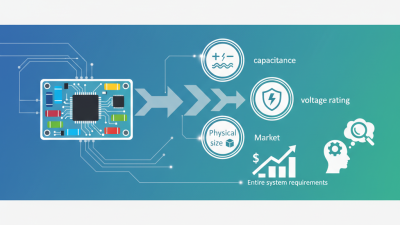
When buying an electronic capacitor, define capacitance before comparing price or package size. Capacitance controls how much charge the component stores. A 10 µF capacitor may support smoothing, timing, or energy buffering, depending on the circuit. Check the required value at the actual operating frequency and temperature. A marked value is not always the working value.
Voltage rating needs practical headroom. Never select a capacitor rated exactly at the circuit’s maximum voltage. Spikes, switching noise, and supply variation can exceed that level briefly. I usually allow a sensible margin after checking the measured waveform with an oscilloscope.
For example, a 25 V rating may be uncomfortable on a rail that normally reaches 20 V. More margin can improve reliability, but excessive voltage rating may increase size or cost.
Tolerance describes how far the real capacitance can differ from its stated value. A capacitor marked 10 µF with ±20% tolerance may measure between 8 and 12 µF under specified conditions.
That difference can affect filter cutoff points, timing intervals, and sensor stability. Check temperature characteristics and aging data, not only the printed tolerance. I once treated tolerance as a minor detail. That was a mistake. Also confirm ripple current and leakage requirements, because a correct capacitance value can still perform poorly in service. Test a sample when the circuit is sensitive. Small assumptions become expensive failures.
10 Tips for Buying Electronic Capacitors
Choose the Right Capacitor Type for Your Circuit
Start with the circuit’s electrical job, not the lowest advertised price. Ceramic capacitors suit high-frequency bypassing because they offer low impedance and compact size. Electrolytic capacitors provide larger capacitance for power-supply smoothing. Film capacitors work well in timing, filtering, and precision signal paths. Tantalum types can serve compact designs, but their voltage margin needs careful attention.
Check capacitance, rated voltage, tolerance, ESR, ripple current, temperature range, and expected lifetime. Select a voltage rating comfortably above the circuit’s maximum voltage. Add practical derating for surges and temperature changes. For switching supplies, compare impedance across the operating frequency. A capacitor with impressive capacitance may perform poorly at the frequency that matters. Polarity also matters. Reversing a polarized capacitor can cause rapid failure.
Measure the real conditions.
Review the datasheet, package size, lead spacing, and insulation requirements before ordering. Confirm whether the capacitor fits near heat sources or vibrating components. In field repairs, incorrect temperature ratings often create repeated failures. A common mistake is choosing by capacitance alone. I would recheck the ripple current and ESR after the first selection. The circuit may need a small ceramic capacitor beside a larger electrolytic unit. That combination is not always necessary, but it often improves high-frequency response. Keep records of test results, tolerance changes, and supplier documentation for reliable future purchasing.
This chart shows the ideal capacitive reactance of a 10 µF capacitor at different frequencies. As frequency increases, reactance decreases, allowing higher-frequency signals to pass more easily. When selecting a capacitor, also check capacitance, voltage rating, tolerance, polarity, temperature range, ESR, ripple-current capability, package size, lifetime, and dielectric type.
When buying electronic capacitors, temperature rating deserves more attention than a low purchase price. A capacitor may sit near a heat sink, inside a sealed enclosure, or beside a power resistor. Measure the real operating temperature, not only the room temperature. Add internal heating caused by ripple current. Many engineers use a temperature margin, but the exact margin depends on the design and application. I prefer recording temperatures during startup, full load, and long idle periods. Short tests can mislead. They often do.
Lifetime ratings require careful reading. A stated life may apply at a specific temperature and ripple current. It does not guarantee identical service in your circuit. Higher temperature usually accelerates aging, while lower stress can extend useful life. Check the calculation method, endurance conditions, capacitance change, leakage current, and equivalent series resistance limits. I once treated a 5,000-hour rating as a simple calendar promise. That assumption was wrong. Convert the rating using the relevant temperature rule, then verify it against expected duty cycles. If the capacitor controls timing or filtering, modest drift may affect system behavior.
Reliability involves more than lifetime. Review voltage derating, surge exposure, vibration, humidity, storage conditions, and production consistency. Request test data or inspection records for safety-critical applications. Compare tolerance limits at the actual frequency, because impedance can shift with frequency and temperature. A sample measurement is useful, but it is not proof of long-term stability. Build a small test group and monitor capacitance, ESR, and leakage over time. Keep the records. Patterns often appear before failure.
10 Tips for Buying Electronic Capacitors
When buying an electronic capacitor, physical fit deserves careful attention. Measure its diameter, height, lead spacing, and body clearance. A capacitor may match electrically but still hit a heat sink or enclosure wall. Check the datasheet drawing, not only the product photo. Photos can hide critical dimensions. Leave a few millimeters around the body for airflow and service access. Confirm whether the leads are radial, axial, or surface-mounted. The mounting holes must align with the circuit board.
Polarity is equally important for polarized capacitors. Mark the positive and negative pads on your board before installation. Then compare them with the capacitor’s stripe, symbol, or terminal marking. Reversing polarity can cause leakage, heating, or sudden failure. For a replacement, compare capacitance, voltage rating, temperature rating, and ripple-current capability. A higher voltage rating may help, but it does not correct incorrect polarity or poor physical clearance. I once focused on capacitance and missed a short lead pitch. The part fit the box, but not the board.
Inspect the mounting environment under real operating conditions. Vibration, moisture, nearby heat, and repeated servicing can loosen an otherwise suitable part. Verify the recommended soldering method and terminal strength. For snap-in types, confirm the locking mechanism and hole diameter. For surface-mounted types, check pad dimensions and component height. Measure twice. Ordering samples before a large purchase is practical, especially when tolerances are tight. A small mechanical mistake can delay an entire assembly.
| No. | Buying Check | What to Verify | Practical Guidance |
|---|---|---|---|
| 1 | Confirm the Capacitance | Check the nominal capacitance value and the permitted tolerance, such as ±5%, ±10%, or ±20%. | Use the capacitance specified by the circuit design. A replacement with a different value can affect timing, filtering, motor starting, or power-supply stability. |
| 2 | Check the Rated Voltage | Compare the capacitor's rated voltage with the highest continuous voltage expected in the circuit, including normal variation. | Choose a voltage rating comfortably above the circuit voltage. Do not operate a capacitor at or above its rated limit, especially where surges or transients may occur. |
| 3 | Verify Polarity | Determine whether the part is polarized, non-polarized, or bipolar. Confirm the positive and negative terminals where applicable. | Polarized aluminum electrolytic and tantalum capacitors must be installed with the correct polarity. Reverse connection can cause leakage, overheating, venting, or failure. |
| 4 | Measure Physical Size | Check the body diameter, height, length, width, and any clearance required around the component. | Allow space for insulation, airflow, tool access, and nearby components. A part with the correct electrical rating may still be unsuitable if it cannot fit safely. |
| 5 | Match the Mounting Pattern | Verify lead spacing, terminal arrangement, hole diameter, pad layout, and surface-mount land dimensions. | For through-hole parts, compare the lead pitch and terminal style. For surface-mount parts, confirm the recommended footprint and orientation before ordering. |
| 6 | Check Ripple Current | Compare the capacitor's permitted ripple current with the expected AC ripple or switching current at the operating temperature. | Excess ripple current produces internal heating and shortens service life. Use a part with adequate ripple-current capability for power-conversion and filtering applications. |
| 7 | Review ESR and Impedance | Check equivalent series resistance and impedance at the relevant frequency and temperature. | Low-ESR parts can reduce voltage ripple, but the circuit must be designed to support their characteristics. Use data specified at the frequencies relevant to the application. |
| 8 | Select the Temperature Range | Confirm the minimum and maximum operating temperature, commonly expressed as a range such as −40°C to +105°C or −55°C to +125°C. | Choose a temperature rating that covers the actual ambient temperature plus heat generated by nearby components and capacitor self-heating. |
| 9 | Evaluate Lifetime and Reliability | For electrolytic capacitors, review the specified endurance or useful-life rating at its stated temperature and ripple conditions. | Higher temperature generally accelerates aging. Select an endurance rating suitable for the required operating hours, maintenance interval, and equipment environment. |
| 10 | Confirm Safety and Application Requirements | Check whether the application requires safety-certified capacitors, flame-resistant construction, moisture resistance, vibration tolerance, or a specific dielectric type. | Use capacitors intended for the circuit location. For mains-connected suppression, motor, automotive, medical, or high-vibration equipment, verify the applicable electrical and safety requirements before purchase. |
Supplier comparison should begin with traceability, not the lowest quotation. A 2024 capacitor market report from Fortune Business Insights estimates the global market at more than US$25 billion. That scale attracts both capable distributors and uncertain channels. Request a lot number, manufacturing date, country of origin, and inspection records. Then compare lead times, minimum order quantities, warranty terms, and storage conditions. A polished website proves little.
Specifications must match the circuit’s real stress. Check capacitance tolerance, rated voltage, temperature range, ripple current, ESR, leakage current, and service life. IEC 60384-1 defines general requirements for fixed capacitors, but laboratory compliance does not guarantee suitability in your design. Add operating margin. Not blindly. For electrolytic parts, temperature matters sharply; a supplier’s datasheet should show endurance testing and test conditions.
I once treated voltage rating as the main filter and overlooked ripple heating. That was an expensive lesson.
Pricing needs a total-cost comparison. Include freight, incoming inspection, rejected units, and emergency substitutions. The 2024 WSTS industry forecast reported continuing volatility in the wider electronics supply chain, so unusually cheap stock deserves closer testing. Compare at least three qualified suppliers using the same specification sheet. Ask for sample units from the proposed lot. Verify markings, dimensions, impedance, and capacitance with calibrated equipment. Independent X-ray or electrical analysis may be justified for high-value assemblies.
Authenticity is never a single visual check.