How to Choose the Right Miniature Circuit Breaker for Your Needs?
Choosing the right Miniature Circuit Breaker (MCB) is crucial for electrical safety. According to a report by MarketsandMarkets, the global MCB market is expected to reach $7.5 billion by 2025. This growth reflects the increasing demand for electrical safety devices in residential and commercial setups.
Selecting an MCB requires careful consideration of voltage, current rating, and application type. A mismatch may lead to failures or safety hazards. For example, using an MCB rated too low for a specific application can result in frequent tripping. On the other hand, an over-rated MCB may not provide adequate protection, exposing users to risks.
To make an informed choice, understanding specific needs becomes essential. Factors like environmental conditions and potential load variations play critical roles. A well-chosen MCB ensures reliability and safety, yet many overlook these aspects. This often leads to suboptimal decisions. By reflecting on individual requirements, users can better navigate the selection process.
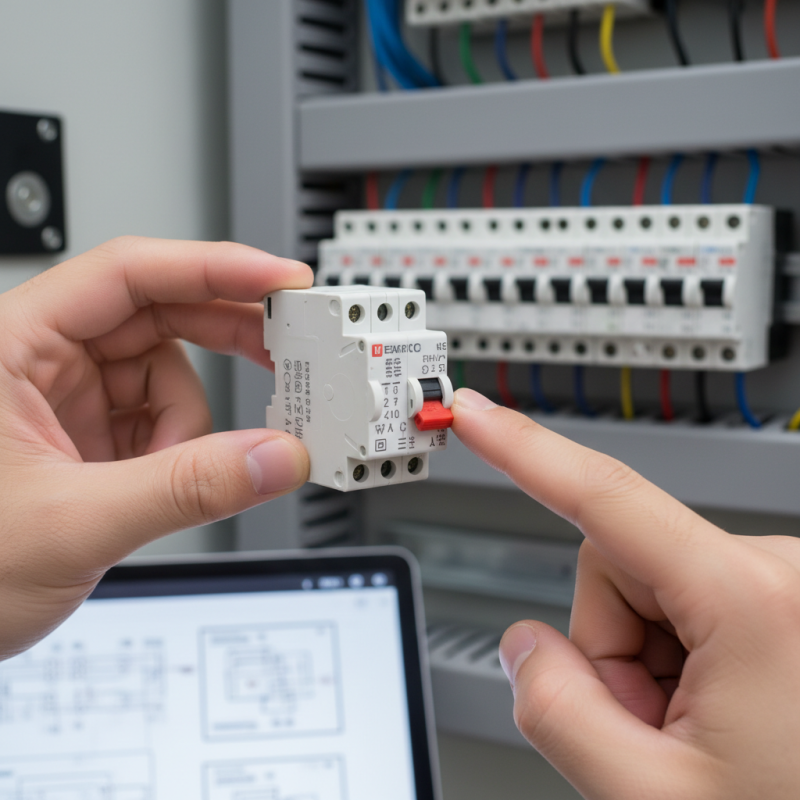
Understanding the Functionality of Miniature Circuit Breakers
Miniature Circuit Breakers (MCBs) play a crucial role in modern electrical systems. They protect circuits from overloads and short circuits, ensuring safety. According to the International Electrotechnical Commission, global consumption of MCBs reached approximately 1.5 billion units in 2022. This number highlights their importance in both residential and industrial settings.
MCBs work by automatically disconnecting the electrical supply during fault conditions. Their mechanism relies on a bimetallic strip that bends and trips the circuit. Analyzing fault currents is essential for selecting the right MCB. For instance, a standard MCB typically trips at a certain current threshold, but variations exist. A quick-response MCB can trip at four to five times its rated current. This means it reacts faster to faults.
It is vital to understand the specific needs of your applications. Selecting the wrong type can lead to issues, like nuisance tripping. In many cases, users report dissatisfaction with how MCBs respond to surges. Up to 30% of industrial users express concerns about MCB reliability. Such data suggests a need for careful consideration during selection. Balancing protection and performance involves a deeper understanding of circuit requirements and breaker specifications.
Identifying Your Electrical Load Requirements and Specifications
Choosing the right miniature circuit breaker (MCB) is crucial. The first step is to identify your electrical load requirements. Consider the total wattage of all appliances. This includes lights, fans, and HVAC systems. Gather these details before selecting your MCB.
Tips: Calculate your total load by adding wattage. If you're unsure, consult an electrician. Making mistakes here can lead to choosing an incorrect MCB.
Next, consider the specifications of the MCB. Look at the voltage rating and current rating. Match these with your electrical system. A mismatch might cause failures or hazards.
Tips: Check the tripping characteristics. Different appliances may need varying responses to faults. For example, sensitive electronics require Type B MCBs. Reflect on your specific needs and environments.
Don’t overlook the importance of compatibility. Check if your MCB suits the distribution board. Avoid choosing a breaker that may not fit. Also, think about the future. Will you add more devices? Always plan for expansion.
Understanding Electrical Load Requirements for Miniature Circuit Breakers
Evaluating Different Types of Miniature Circuit Breakers Available
When evaluating miniature circuit breakers (MCBs), it’s essential to understand the various types available. Each type serves different needs and applications. For instance, Type B MCBs are ideal for residential circuits. They trip between 3 to 5 times the rated current. Meanwhile, Type C MCBs are suitable for commercial settings. They handle larger inrush currents, making them perfect for motors and transformers. Research indicates that up to 70% of electrical faults occur due to inadequately sized breakers, highlighting the importance of proper selection.
Safety is paramount when choosing an MCB. Consider the voltage and current ratings carefully. Each breaker has a specific breaking capacity, which must match or exceed potential fault levels. Installing a breaker with a lower capacity than needed can lead to failure during an overload. In practice, many users find this step overlooked.
**Tip:** Always assess your load requirements before selecting an MCB. Consider peak usage times and appliance wattage.
Another critical factor is the MCB’s trip curve characteristics. These curves illustrate response times during overloads and short circuits. For instance, Type D MCBs manage heavy inductive loads but may be too sensitive for some circuits. Misunderstanding these curves can result in frequent nuisance tripping, disrupting operations.
**Tip:** Consult professional resources or engineering guides to clarify trip curve characteristics. Proper understanding can prevent installation headaches.
Considering the Brand Reputation and Product Reviews
When selecting a miniature circuit breaker (MCB), brand reputation matters greatly. A reputable brand often has extensive testing and quality assurance processes. According to recent industry data, over 70% of consumers consider brand reputation when purchasing electrical products. This highlights the importance of choosing manufacturers with a long history of reliability.
Product reviews offer valuable insights. Many users share their experiences, detailing performance and any issues faced. A study found that 85% of users trust online reviews as much as personal recommendations. Look for patterns in the reviews. Consistent praise for specific features, or a common complaint, can guide your choice.
Tips:
- Always check the manufacturer's certifications. Compliance with international standards guarantees quality.
- Read multiple reviews from different sites. This balances out bias and provides a clearer picture.
Remember, not all products are perfect. Some may have minor defects that don’t affect overall performance but can be frustrating. A careful review process helps identify these issues early on. Making an informed decision enhances reliability and safety in your electrical systems.
How to Choose the Right Miniature Circuit Breaker for Your Needs?
| Criteria | Rating (1-5) | User Reviews | Price ($) |
| Brand Reputation | 4.5 | Generally trusted with many positive reviews. | 25 |
| Ease of Installation | 4.0 | Easy to install with comprehensive guidelines. | 22 |
| Durability | 4.7 | High-quality materials; long-lasting performance. | 30 |
| Customer Support | 4.2 | Responsive service, prompt resolution. | 28 |
| Warranty Period | 4.8 | Long warranty; covers most issues. | 27 |
Ensuring Compliance with Safety Standards and Regulations
Choosing the right miniature circuit breaker (MCB) involves understanding safety standards and local regulations. Compliance is crucial to ensure that your electrical systems are not only effective but also safe. Different regions have specific rules, which can vary significantly. Often, these regulations focus on preventing electrical shocks and minimizing fire risks.
Consider the specifications of the MCB. You need to look at its breaking capacity and current rating. Insufficient specifications may lead to faults. Common mistakes occur here—selecting an MCB with a rating that is too low may cause it to trip unnecessarily. Conversely, one that is too high might not protect your system properly.
Understanding testing standards is also key. Various organizations publish guidelines that MCBs should meet. However, not all manufacturers comply equally. It's wise to research whether an MCB meets the relevant standards. Ask yourself: does it truly fit your needs? Regular checks can help prevent unwanted failures. Compliance isn't just a box to tick; it ensures reliable performance in critical situations.